
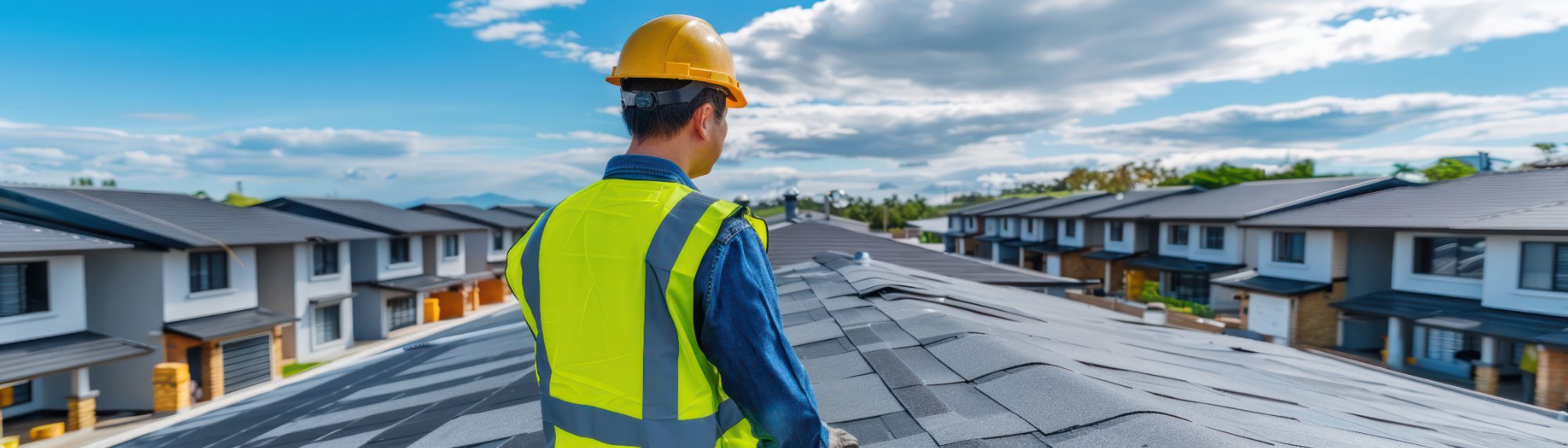
Barking Roof Surveys provide professional, independent roof inspections throughout this rapidly evolving East London borough and its surrounding streets. Our certified surveyors combine drone aerial photography with thermal imaging to deliver accurate, detailed assessments of every roof type found across this stretch of the Thames estuary — from the remaining Victorian terraces clustered around East Street and the old town centre, through the extensive 1930s housing of the Leftley and Faircross estates, the interwar semis and terraces lining Longbridge Road and Upney Lane, to the post-war council-built blocks on the Gascoigne and Thames View estates and the contemporary new-build apartments emerging at Barking Riverside.
Fast, independent roof surveys from local experts.
Barking's housing stock tells the story of East London's growth over more than a century. The remnants of Victorian expansion sit alongside the vast interwar suburban building programme that transformed farmland into streets of family homes, and both coexist with the post-war estates and the twenty-first-century regeneration that continues to reshape the borough. Each era brought different roofing materials, construction methods, and characteristic weaknesses — and each demands a surveyor who can distinguish between acceptable ageing and genuine defects that require attention. Barking Roof Surveys bring exactly that level of knowledge to every property we inspect.
Whether you are buying a terraced house near the station, investigating persistent damp in a 1930s semi on the Leftley Estate, building an insurance case after wind damage to a flat roof in Thames View, or simply seeking honest answers about an ageing roof before committing to expensive repairs, our surveys deliver the documented evidence you need to act with confidence.
Barking Roof Surveys exist for a straightforward reason: too many property owners in this part of East London have been let down by vague homebuyer reports, pressured into unnecessary roof work by contractors with a financial interest in the outcome, or caught out by problems that a thorough, independent inspection would have revealed before contracts were exchanged. Our purpose is to close that gap between uncertainty and reliable information.
Every inspection follows a structured, repeatable process. We begin with a full ground-level perimeter assessment — checking rainwater goods, fascias, soffits, and any defects visible from below. Our DJI Enterprise drone then captures high-resolution images of every elevation, ridge, valley, hip, and chimney stack, reaching vantage points that ladders and scaffolding simply cannot match on Barking's tightly packed Victorian terraces and the awkward rear extensions found across the interwar estates. Where thermal imaging is included in the survey package, our FLIR cameras map moisture patterns hidden beneath tiles, behind flashings, and within the roof structure itself.
What sets Barking apart from many surveying areas is the sheer variety of roofing packed into a small geographic footprint. A Victorian slate terrace on North Street will have completely different failure modes from a concrete-tiled 1930s semi on Upney Lane, and both differ again from the asphalt flat roofs on a 1960s block in Gascoigne. Barking Roof Surveys work confidently across every one of these types because this borough demands that range of expertise.
We carry no commercial interest in what we find. Barking Roof Surveys do not undertake roof repairs and hold no financial stake in the outcome of any inspection. When our report says a roof is sound, that finding carries genuine credibility. When we identify a defect, the repair costings reflect real market rates — not inflated figures designed to create urgency.
Nearby Areas with Similar Properties: The roofing challenges we encounter across Barking are shared by properties in neighbouring parts of East London. Homeowners in Dagenham and East Ham face comparable issues with interwar concrete tile fatigue, Victorian slate deterioration, and flat roof failures on post-war housing. See our area-specific guides for detailed information about your location.
Barking Roof Surveys are not roofers, builders, or contractors. We provide independent inspection and reporting only — ensuring every assessment is free from commercial bias.
Barking Roof Surveys are ready to inspect your property. Whether it is a Victorian terrace near the town centre, a 1930s family home on the Leftley Estate, or a post-war flat in Gascoigne, our team delivers the answers you need.
What Barking Roof Surveys bring to homeowners, buyers, and landlords across East London
Barking's housing layout presents particular access challenges. Tightly packed Victorian terraces near the town centre leave almost no room for safe ladder placement in rear yards, while the bay-fronted 1930s semis along Longbridge Road and across the Leftley Estate have complex multi-pitch rooflines that cannot be fully assessed from ground level. Our DJI Enterprise drone captures every ridge, hip, valley, flashing, and chimney stack in high-definition detail, documenting defects that would otherwise go unrecorded.
Moisture is a persistent concern across Barking's ageing housing stock. The proximity to the Thames and the Roding, combined with the area's low-lying terrain, creates an environment where hidden leaks can develop behind tiles and beneath flashings for months before visible staining appears inside. Our FLIR thermal cameras detect temperature differentials caused by trapped moisture — identifying active ingress paths through roofing materials and into the timber structure below.
Every Barking Roof Surveys report is a substantial working document — annotated with high-resolution drone photographs, thermal overlays where applicable, and clear itemised repair costings at current market rates. The report is designed to be passed directly to your solicitor during a property purchase, submitted to an insurer as documented evidence for a claim, or handed to a roofing contractor as a precise specification for the work that needs doing.
Barking Roof Surveys hold full professional indemnity and public liability insurance. Our surveyors carry recognised industry certifications and CAA-approved drone pilot licences. Every inspection follows a standardised methodology developed across thousands of properties — ensuring the same rigour and accuracy whether we are assessing a Victorian end-of-terrace near the Abbey ruins or a newly built apartment at Barking Riverside.
Barking is not one housing type repeated across a single postcode — it is a patchwork of distinct neighbourhoods, each with its own building era, materials, and roof-specific vulnerabilities. The Victorian terraces surviving around the old town centre carry natural slate, brick chimney stacks, and cast iron guttering that has often been in place for over a hundred years. The extensive interwar streets — the Leftley Estate, Faircross, Upney Lane, Longbridge Road — present clay and concrete tiles on steep pitches with bay window lead work prone to fatigue. The post-war estates of Gascoigne and Thames View introduced flat roofs, concrete panel construction, and asphalt coverings with shorter lifespans than most residents expect.
Barking Roof Surveys have earned the trust of local homeowners by understanding these differences at a granular level. We do not run through a generic checklist — we adjust every inspection to match the age, material, and construction method of the specific roof. That local precision is the difference between a report that genuinely helps you make decisions and one that merely confirms a roof is present.
From the surviving Victorian slates near East Street to the concrete tiles of the Leftley Estate, Barking Roof Surveys understand this borough's roofscape at street level.
How Barking Roof Surveys have helped local homeowners and property buyers
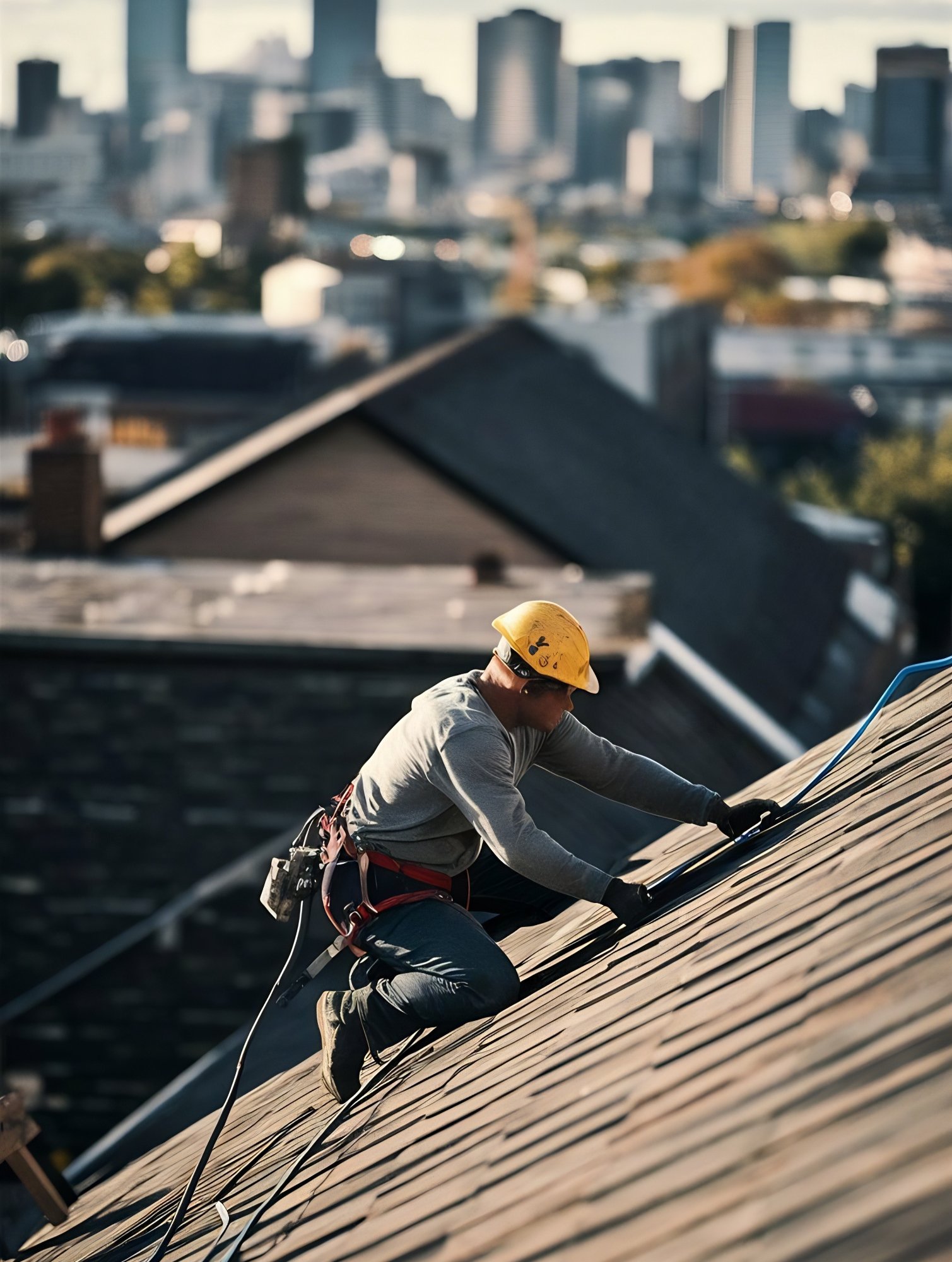
A couple purchasing a double-bay 1930s semi on the Leftley Estate received a homebuyer report describing the roof as "adequate for its age." The report noted minor moss growth but nothing requiring urgent attention. With properties on this popular estate selling above five hundred thousand pounds, the buyers wanted independent confirmation before committing.
Our drone inspection revealed that both front bay window lead flashings had lifted and were allowing rainwater to track behind the brickwork. Thermal imaging confirmed moisture had penetrated the timber lintel above the ground-floor bay and was spreading into the first-floor joist ends. We also documented seven cracked concrete tiles on the rear slope and eroded ridge mortar along the full length of the main ridge.
Barking Roof Surveys costed the combined flashing replacement, timber treatment, tile repairs, and ridge repointing at approximately eight thousand two hundred pounds. The buyers' solicitor presented our report and negotiated the full amount off the asking price. The flashing repairs were completed within four weeks of completion, halting what had been a progressive moisture path into the structural timbers.
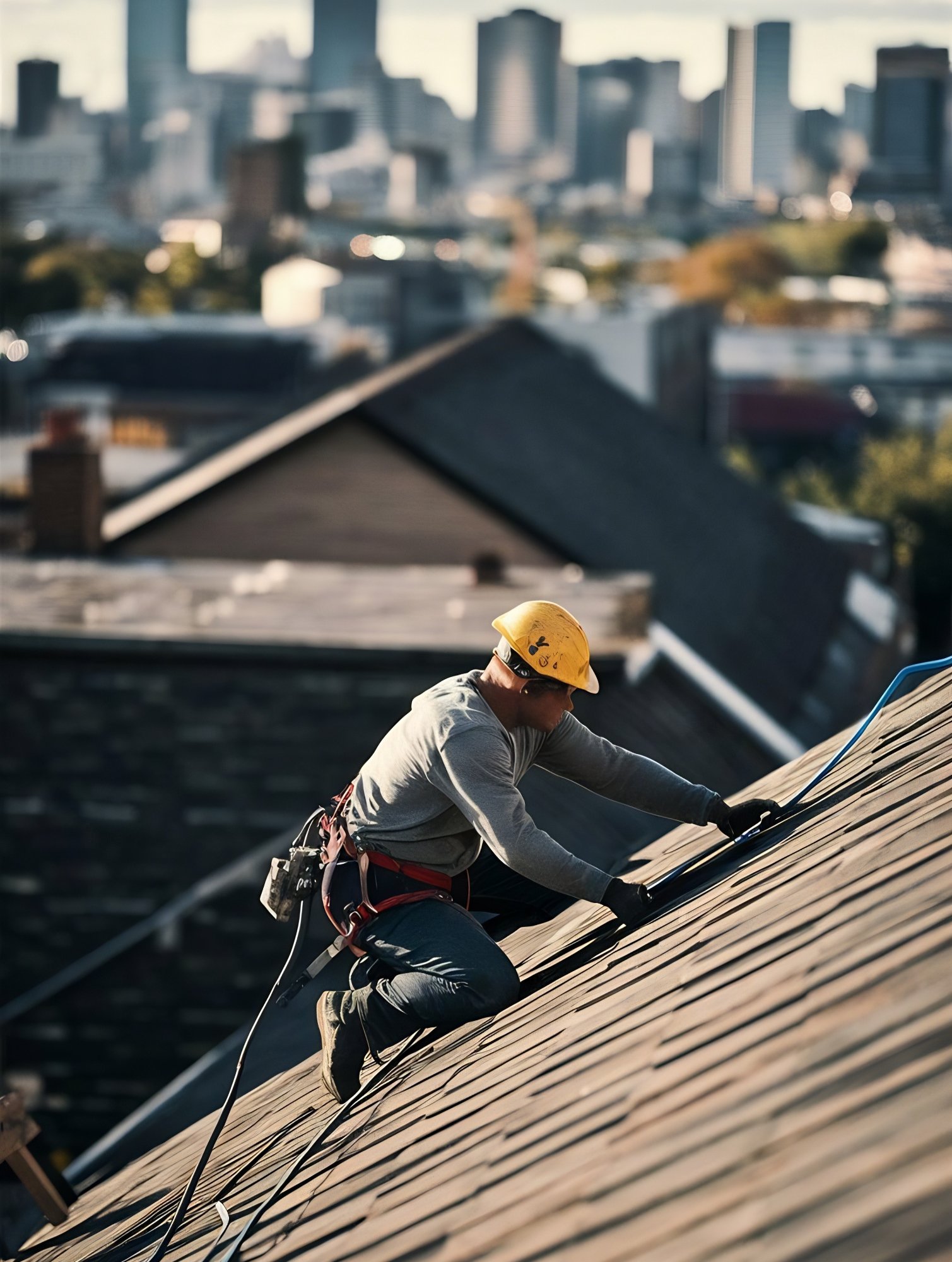
After severe autumn winds, a homeowner near East Street discovered water entering the front bedroom through the ceiling. Their insurer sent a loss adjuster who attributed the damage to "long-term neglect" and rejected the claim outright. The homeowner disputed the finding and contacted Barking Roof Surveys for an independent opinion.
Our drone documented four recently displaced Welsh slates on the front elevation — each showing clean fracture lines with no weathering on exposed edges, consistent with sudden wind impact rather than gradual deterioration. Thermal imaging mapped a concentrated moisture trail from the displaced slates through to the bedroom ceiling below. We also photographed a chimney pot displaced from its flaunching, resting against the stack with fresh mortar debris visible on the slate below.
Our timestamped and annotated report was submitted as a formal dispute. The insurer reassessed the claim and approved it in full within four weeks. Total repair costs of three thousand eight hundred pounds were covered under the policy. The Barking Roof Surveys report provided precisely the documented, photographic evidence the insurer needed to reverse their original position.
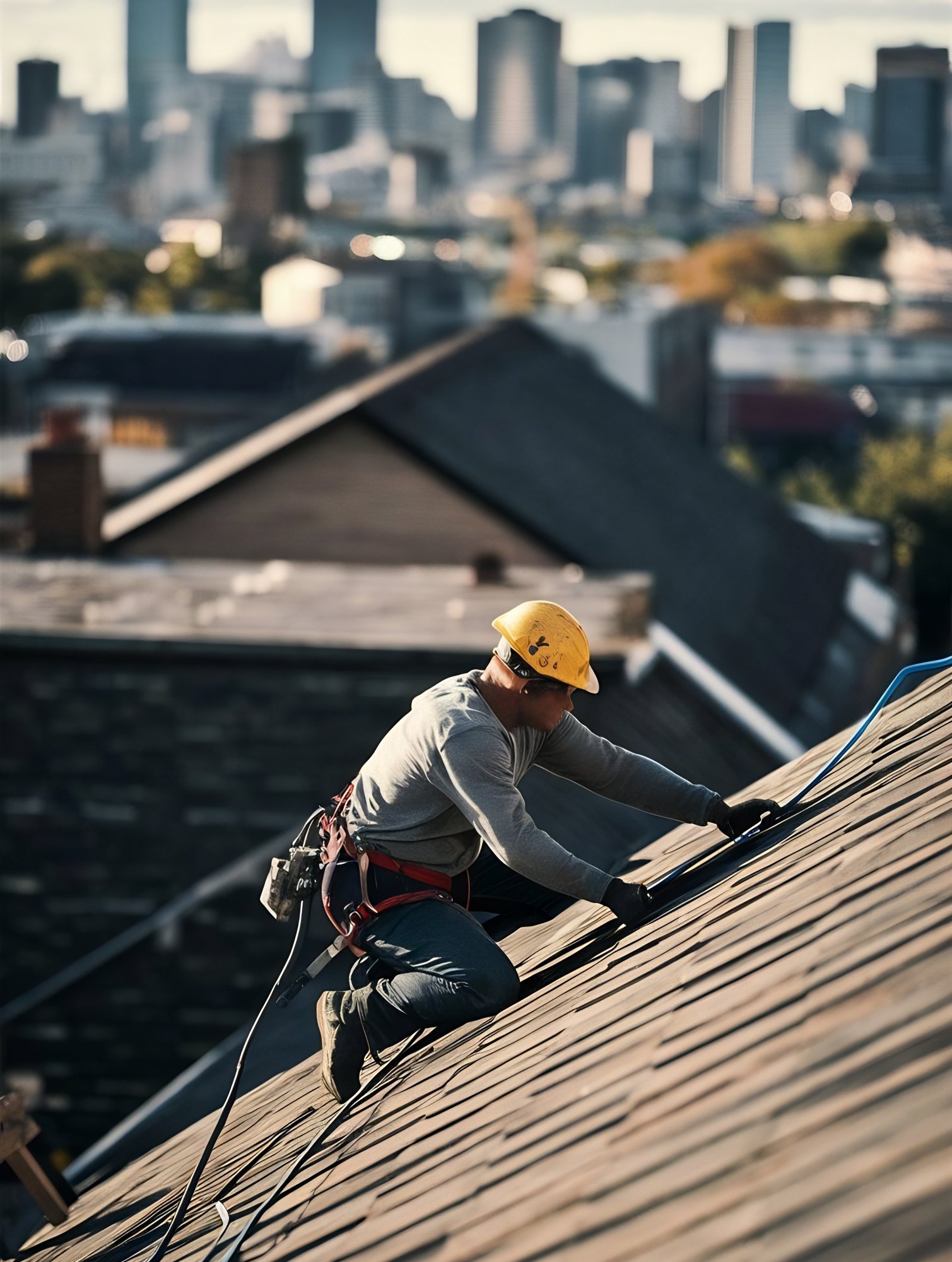
A landlord with a 1950s semi on the Thames View estate had spent over four thousand pounds on repeated patch repairs to a rear flat roof extension over three years. Each repair held for a few months before leaks returned in a different location. Frustrated and facing tenant complaints, they asked Barking Roof Surveys to determine whether the entire covering needed replacement or whether targeted intervention could resolve the issue permanently.
Our comprehensive survey revealed that the original felt covering had been patched and overlaid so many times that moisture was trapped between layers, creating a sponge effect across the entire deck. Thermal imaging showed saturated areas covering approximately seventy percent of the flat roof surface. The good news was that the timber decking beneath remained structurally sound — the moisture had not yet penetrated deep enough to cause rot.
Barking Roof Surveys recommended a complete strip-back to the deck and replacement with a GRP fibreglass system, costed at approximately five thousand six hundred pounds. This was less than the landlord had already spent on failed repairs. The new covering was installed within two weeks, carries a twenty-year guarantee, and has performed without issue since. Our report gave the landlord the confidence to invest properly rather than continuing to waste money on temporary fixes.
A homeowner on Upney Lane received a quote for fourteen thousand pounds to strip and re-tile the main roof after a roofer diagnosed widespread tile failure from a quick ladder inspection. Before approving the expenditure, the homeowner wanted a second opinion and contacted Barking Roof Surveys.
Our drone survey confirmed that the front slope was indeed showing widespread concrete tile delamination and needed re-covering. However, the rear slope — which the original roofer had not inspected from above — was in considerably better condition, with only localised cracking around the soil vent pipe penetration. More critically, we discovered that the party wall flashing on the left side had separated entirely, a defect the roofer had not mentioned and which was the actual source of the internal damp the homeowner had reported.
Barking Roof Surveys provided a prioritised specification: front slope re-tile, party wall flashing replacement, and localised tile repairs to the rear. Total estimated cost was eight thousand five hundred pounds — a significant saving. More importantly, addressing the flashing failure solved the damp problem that had prompted the original enquiry. Without our aerial assessment, the homeowner would have spent fourteen thousand replacing tiles while the actual leak source went untreated.
Need a professional roof survey for your Barking property? Get in touch with Barking Roof Surveys today for a free consultation.
Feedback from homeowners and buyers who have used Barking Roof Surveys
"Purchasing a 1930s semi on the Leftley Estate, we knew the homebuyer survey wouldn't give us the full picture on the roof. Barking Roof Surveys discovered lifted bay window flashings and cracked ridge tiles that would have cost us thousands after moving in. Their report gave our solicitor everything she needed to renegotiate. Outstanding service from start to finish."
"Persistent damp above our rear bedroom had been worsening for over a year and two different roofers gave us contradictory explanations. Barking Roof Surveys traced the problem with their thermal camera to a concealed parapet gutter defect that neither tradesman had even considered. Resolved within a fortnight. Genuinely worth the investment."
"One roofing company wanted eighteen thousand for a complete strip and re-tile. Barking Roof Surveys showed that only the rear slope needed attention — the front and sides had years of serviceable life remaining. Saved us over nine thousand pounds and gave us a maintenance plan for the next decade. Honest, thorough, and completely independent."
The most frequent roofing defects Barking Roof Surveys encounter across the borough's diverse housing stock
The 1930s housing that dominates the Leftley Estate, Faircross, and Upney areas was largely roofed with concrete interlocking tiles. After ninety years of exposure, these tiles develop surface delamination — the outer face crumbles, exposing the porous aggregate beneath. Once the protective surface is lost, water absorption accelerates and freeze-thaw cycles cause rapid cracking. This is the single most common defect we encounter across Barking.
Lead flashings around chimney stacks, bay windows, and abutment walls have a finite lifespan. Across Barking's interwar housing, original lead work is now approaching or exceeding that limit. The most common failure mode is thermal fatigue — the lead expands and contracts with temperature changes until it splits along fold lines. Bay window flashings on the double-fronted 1930s semis are particularly vulnerable and a frequent source of concealed damp.
Flat roofs appear across every era of Barking housing — from felt-covered rear extensions on Victorian terraces to asphalt-topped post-war maisonettes on the Gascoigne and Thames View estates. Ponding water, blistering, cracked seams, and failed upstands are routine findings. Many flat roofs in Barking have been repeatedly patched rather than properly replaced, creating layered coverings that trap moisture between them and accelerate the very problem they were meant to solve.
Barking sits on low, flat ground near the Thames estuary, exposed to prevailing winds with little topographic shelter. Over decades, this persistent wind exposure erodes the mortar bedding that holds ridge tiles in place. Loose ridge tiles are a safety hazard in high winds and allow rainwater to enter the roof structure at its highest point. The interwar estates are most commonly affected, though we encounter the problem across all eras of Barking housing.
The Victorian terraces near Barking town centre and along some of the older streets carry original Welsh slate roofing. Over time, the copper or iron nails holding individual slates corrode and fail, allowing slates to slip out of position. A single slipped slate may seem minor, but it exposes the felt or boarding beneath to direct weathering, and adjacent slates often follow once the interlocking pattern is broken.
Many of Barking's older properties retain their original brick chimney stacks even where the fireplaces below have been sealed. Without the warm air rising through the flue, condensation builds inside the stack and accelerates morite deterioration from within. External pointing erodes simultaneously, and the combination can leave a chimney structurally compromised — leaning, spalling, or shedding mortar onto the roof below. Stacks on Victorian terraces and 1930s semis are both affected.
Situations where a professional roof inspection from Barking Roof Surveys provides essential clarity
Barking's property market moves quickly and buyers need to act with confidence. A standard homebuyer report rarely examines the roof in meaningful detail — it typically notes visible issues from ground level and recommends further investigation. Our pre-purchase surveys fill that gap, providing the documented evidence you need to negotiate on price or walk away informed. With the average Barking house now exceeding three hundred thousand pounds, an undetected roof defect can represent a significant hidden cost.
Damp staining on a ceiling or wall does not always indicate where water is entering. Moisture can travel considerable distances along timbers, behind plaster, and through concealed paths before becoming visible. Our thermal imaging pinpoints the actual entry point with precision, preventing the costly cycle of trial-and-error repairs that many Barking homeowners experience when working with contractors who diagnose from a ladder.
Barking's flat, low-lying terrain near the Thames offers almost no natural wind shelter. Storm events can displace tiles, lift flashings, and dislodge chimney components without the damage being visible from the ground. Our post-storm surveys document every defect with timestamped drone photography — the format insurers require to process claims efficiently. We have helped numerous Barking residents overturn initially rejected claims by providing the photographic evidence loss adjusters had failed to gather.
Roofing contractors have a financial interest in the scope of work they recommend. An independent survey from Barking Roof Surveys establishes exactly what needs doing — and equally importantly, what does not. We routinely save Barking homeowners thousands by confirming that partial repairs will suffice where a contractor has proposed a complete re-roof, or by identifying the actual defect when a tradesman has been treating the wrong area.
Transparent pricing from Barking Roof Surveys — choose the inspection level that suits your property and your needs
Barking Roof Surveys offer three tiers of inspection to match different property types, budgets, and levels of concern. Every survey is carried out by the same certified team using the same professional methodology — the difference lies in the depth of investigation and the technology deployed. Whether you own a compact Victorian terrace near the station or a sprawling double-bay 1930s semi on the Leftley Estate, there is a package designed for your situation.
Essential visual roof assessment for Barking homeowners needing a clear overview of their roof's current condition
Full drone and thermal imaging inspection — the most requested package for Barking buyers and homeowners
Complete structural roof assessment for Barking's larger properties, period homes, and commercial premises
Common questions answered by Barking Roof Surveys
Barking Roof Surveys cover the full extent of Barking and its surrounding districts. Our regular inspection areas include Barking town centre around East Street and the Broadway, the residential streets of Upney and Longbridge, the Leftley and Faircross estates, Gascoigne, Eastbury, and the Thames View estate south of the A13. We also attend properties in Barking Riverside and along the borders with East Ham and Ilford.
A typical Barking property inspection takes between one and two hours on site, depending on roof complexity and access conditions. The larger double-bay 1930s semis on the Leftley Estate and Faircross tend toward the longer end of that range due to multiple roof pitches and bay window lead work. Compact Victorian terraces near the town centre are generally quicker to assess. Every client receives their full written report within forty-eight hours of the visit.
Victorian terraces are a regular and important part of our Barking workload. The streets around East Street, North Street, and the older core of the town centre contain rows of late-Victorian terraced housing with natural slate coverings, brick chimney stacks, and original cast iron rainwater goods. Our drone technology is especially valuable on these properties, where narrow rear access, shared passageways, and boundary walls make conventional ladder placement impractical or impossible.
Every comprehensive and premium report from Barking Roof Surveys includes timestamped drone photography, thermal scan overlays, detailed damage narratives, and itemised repair costings at current market rates. Insurers require documented, photographic evidence when processing claims, and our reports are structured to meet those requirements precisely. We have helped numerous Barking homeowners successfully challenge rejected claims — particularly after storm events that sweep across the exposed Thames estuary terrain.
Barking's low-lying position near the Thames and Roding confluence exposes properties to wind-driven rain with minimal topographic shelter. The most frequent defects we encounter include cracked and delaminating concrete tiles on the extensive 1930s housing stock, slipped natural slates on Victorian terraces, degraded lead flashings around chimney stacks and bay windows, failed flat roofs on rear extensions across virtually every era, and widespread ridge mortar erosion accelerated by persistent wind exposure. The post-war estates also present asphalt flat roof deterioration and concrete panel joint failures.
Commercial inspections represent a growing share of our Barking schedule. We survey retail premises along East Street and the Broadway, the converted and new-build commercial units emerging from the town centre regeneration, school buildings, community premises, and the mix of industrial and commercial properties across the wider borough. All flat roof systems — felt, GRP, EPDM, single-ply membrane, and asphalt — fall within our scope, as do the pitched roofs on Barking's converted commercial buildings.
Have another question? Contact Barking Roof Surveys directly.
Barking Roof Surveys provide professional roof inspections across the borough and surrounding areas
The historic core around East Street, the Broadway, and St Margaret's Church contains a mix of surviving Victorian terraces, converted period buildings, inter-war commercial premises, and the new-build residential blocks emerging from the ongoing regeneration programme. Natural slate, brick chimney stacks, and original cast iron rainwater goods characterise the older properties.
Two of Barking's most sought-after residential areas, developed primarily in the 1930s with substantial double-bay semi-detached and terraced family homes. Concrete interlocking tiles on steep pitches, bay window lead flashings, and original chimney stacks are characteristic of this housing stock, alongside frequent rear extensions with flat roof coverings.
The residential streets surrounding Upney station and running along Longbridge Road feature a dense mix of 1920s and 1930s terraced and semi-detached housing. Plain clay and concrete tiles on steep pitches, bay window constructions, and the characteristic shared party wall flashings of terraced housing are the defining roofing features of these neighbourhoods.
The Gascoigne estate — one of Barking's largest post-war housing developments — and the neighbouring Eastbury area present a mix of 1960s maisonette blocks, low-rise flats, and terraced housing. Flat roofs in asphalt and felt, concrete tile pitched roofs, and the ongoing regeneration construction that is transforming parts of this neighbourhood make it a diverse surveying environment.
South of the A13, the Thames View estate comprises post-war semi-detached and terraced housing with concrete tile roofs and numerous flat-roofed extensions. Adjacent to this, Barking Riverside is one of London's largest new-build developments, delivering thousands of contemporary apartments and houses with modern roofing systems that still benefit from snagging and warranty inspections.
Barking Roof Surveys operate across the wider borough and into neighbouring parts of East London. We regularly attend properties in surrounding towns and districts that share similar housing stock and roofing challenges.
Barking Roof Surveys provide the independent, professional roof inspections that this evolving East London borough demands. Whether you are a first-time buyer assessing a Victorian terrace near the station, a homeowner dealing with storm damage on the Leftley Estate, a landlord protecting a portfolio property in Thames View, or simply seeking honest answers about an ageing roof before committing to expensive repairs, our surveys deliver the clarity you need to act with confidence.
Every inspection combines certified expertise with advanced technology — drone aerial photography, thermal imaging, and detailed written reporting — to provide a complete, unbiased picture of your roof's condition. We do not carry out repairs. We do not recommend contractors. We provide the facts, the photographs, and the costings, and you decide what happens next.
Every report is independent, detailed, and designed to be acted upon — whether you are buying, selling, claiming, or simply protecting your investment.
Call us today or complete the form below to arrange your Barking roof survey.
Contact Barking Roof Surveys today to arrange your roof inspection
Monday - Friday: 7:30 AM - 9:30 PM
Saturday: 7:30 AM - 7:00 PM
Sunday: 9:00 AM - 5:00 PM
For urgent roof inspection needs in Barking, please call Barking Roof Surveys directly.
Call Now