
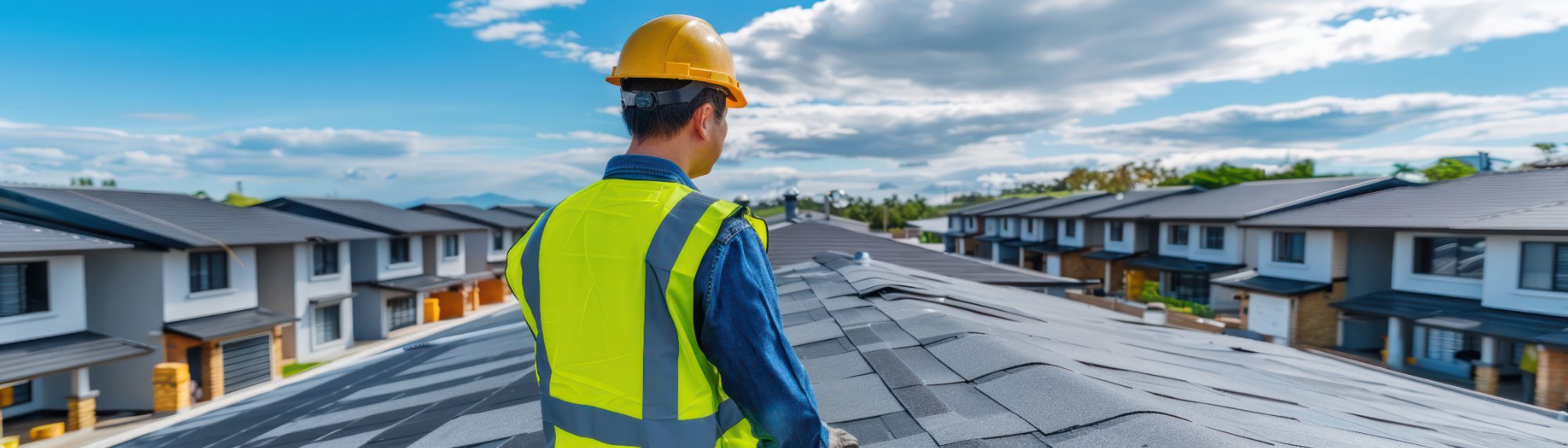
Ealing Roof Surveys provide independent, certified roof inspections across one of West London's most established and architecturally varied boroughs. Our surveyors combine drone aerial photography with thermal imaging technology to deliver precise, evidence-based assessments of every roof type found within the borough — from the handsome Edwardian villas lining the tree-canopied avenues of Pitshanger and the bay-fronted Victorian terraces stretching through South Ealing and Ealing Common, to the interwar semis flanking the roads around Northfields, the mixed housing stock of West Ealing, the hillside properties climbing Hanger Hill and Castlebar, and the quieter residential streets reaching towards Hanwell and the Brent Valley.
Fast, independent roof surveys from local experts.
Ealing earned its Victorian-era nickname as the "Queen of the Suburbs" through wave after wave of ambitious residential development, and that layered building history is written across its rooftops today. Grand Arts and Crafts houses near Ealing Green sit alongside rows of Edwardian terraces, 1920s and 1930s family homes with hipped tiled roofs, post-war council-built estates, and pockets of modern infill development. Each generation introduced different roofing materials and construction methods, and each carries its own vulnerabilities as the decades pass. Ealing Roof Surveys bring the specialist knowledge and technology to assess every one of them with accuracy and independence.
Whether you are buying a property near Haven Green, chasing a persistent leak through a Victorian roof in South Ealing, building an insurance claim after storm damage has struck a Northfields semi, or weighing up whether an ageing roof really needs the expensive overhaul a contractor has quoted, our surveys supply the hard evidence to support confident decisions.
Ealing Roof Surveys exist because too many property owners in this borough have committed to expensive roof work without first receiving a genuinely independent opinion. We have seen homeowners pay for complete re-tiles when targeted repairs to a single slope would have resolved the problem, and buyers complete purchases only to discover hidden defects that a more rigorous inspection would have revealed weeks earlier. Our purpose is to close that knowledge gap with impartial, technology-backed evidence.
Every inspection follows a structured, repeatable process. We begin with a full perimeter walk at ground level, examining rainwater goods, fascias, soffits, and visible defects from below. Our DJI Enterprise drone then ascends to capture high-resolution imagery of every elevation, ridge, hip, valley, chimney stack, and flashing detail — including angles that scaffolding and ladders cannot safely achieve on Ealing's tightly packed Edwardian terraces and the steeply pitched Victorian rooflines found throughout South Ealing and Ealing Common. Where the survey package includes thermal imaging, our FLIR cameras map moisture patterns hidden beneath tiles and within the roof structure itself.
The borough's roofscape demands breadth of experience. A slate-roofed Victorian terrace on Ealing Common will present fundamentally different inspection challenges from a 1930s hipped-roof semi near Northfields station, and both differ again from a flat-roofed post-war maisonette in West Ealing. Ealing Roof Surveys work confidently across every era and material because this diverse housing stock is our daily working environment.
Independence underpins everything we do. Ealing Roof Surveys do not carry out roof repairs and we hold no commercial interest in the findings of any inspection. When we confirm that a roof is performing well, you can rely on that conclusion. When we identify a defect, the costings in our report reflect genuine current market rates — not inflated figures designed to create urgency.
Nearby Areas with Similar Properties: The roofing challenges we encounter across Ealing are shared by properties in the surrounding West London boroughs. Homeowners in Acton and Chiswick face comparable issues with ageing slate coverings, Edwardian lead work, and Victorian chimney stack deterioration. See our area-specific guides for detailed information about your location.
Ealing Roof Surveys are not roofers, builders, or contractors. We deliver independent inspection and reporting only — so every assessment is entirely free from commercial bias.
Ealing Roof Surveys are ready to inspect your property. Whether it is a Victorian terrace in South Ealing, an Edwardian villa in Pitshanger, or a 1930s semi near Northfields, our team delivers the answers you need.
What Ealing Roof Surveys bring to homeowners, buyers, and landlords across the borough
Ealing's densely built Victorian and Edwardian streets present significant access constraints. Rear extensions, narrow side returns, and adjoining party walls make safe ladder placement difficult or impossible on many properties. Our DJI Enterprise drone captures every ridge, hip, valley, flashing, and chimney stack in high-definition detail — including rear elevations and hidden junction points that ground-based methods consistently miss.
Concealed moisture is one of the most damaging and least visible threats to Ealing's older housing stock. A leaking lead flashing on a Victorian terrace can allow water to track along timbers for months before staining appears on a ceiling below. Our FLIR thermal cameras detect the temperature differentials that betray moisture trapped beneath tiles, behind flashings, and within the roof structure — identifying problems long before they become visible to the naked eye.
Every Ealing Roof Surveys report is built around high-resolution annotated drone photography, thermal overlays where applicable, and clear itemised repair costings at current market rates. Reports are structured to serve multiple purposes — whether you need to present evidence to a solicitor during a property transaction, submit documentation to an insurer for a storm damage claim, or hand a roofing contractor a precise specification for the work required.
Ealing Roof Surveys hold full professional indemnity and public liability insurance. Our surveyors carry recognised industry certifications and CAA-approved drone pilot licences. Every inspection follows a standardised methodology refined across thousands of London properties, delivering consistency and accuracy regardless of whether we are assessing a converted Victorian villa near Haven Green or a post-war flat-roofed maisonette in West Ealing.
Ealing is a borough of distinct neighbourhoods, each carrying its own architectural character and roofing signature. The Edwardian avenues of Pitshanger feature clay-tiled roofs with decorative ridge work, lead-dressed dormers, and tall chimney stacks with original pots. South Ealing and Ealing Common are defined by Victorian terraces under Welsh slate, with parapet walls, butterfly roofs on rear additions, and lead valley gutters that age faster than most owners realise. The interwar housing around Northfields and Hanger Lane presents plain clay and concrete tiles on hipped rooflines with bay window lead work that degrades steadily over time.
Ealing Roof Surveys have established our reputation by understanding these distinctions at street level. We do not run through a generic checklist — every inspection is shaped by the specific age, materials, and construction method of the roof we are examining. That granular local knowledge separates a report that tells you something genuinely useful from one that merely confirms a roof is present.
From the Edwardian clay tiles of Pitshanger to the concrete interlocking tiles on Northfields semis, Ealing Roof Surveys understand this borough's roofscape from end to end.
How Ealing Roof Surveys have helped local homeowners and property buyers

A couple purchasing a detached Edwardian villa on one of the avenues off Pitshanger Lane received a homebuyer report describing the roof as "generally adequate for the age of the building." The property was priced above one and a quarter million pounds, and the buyers were unwilling to exchange contracts without a dedicated roof assessment given the age and complexity of the roofline.
Our drone inspection revealed that the front dormer — clad in decorative tile hanging — concealed a severely deteriorated lead apron flashing along its base. The lead had cracked and lifted away from the main roof slope, creating a channel for rainwater to enter the roof structure beneath. Thermal imaging confirmed active moisture ingress extending more than a metre into the timbers either side of the dormer. We also documented two fractured hip tiles on the rear elevation and eroded pointing around both chimney stacks.
Ealing Roof Surveys costed the dormer flashing replacement, hip tile repairs, and chimney repointing at approximately eight thousand six hundred pounds. The buyer's solicitor presented our evidence and the vendor accepted a price reduction covering the full remedial cost. The dormer flashing was renewed within five weeks of completion, preventing what would have become serious structural timber decay had moisture continued tracking through another winter.

Following a heavy rain and wind event in autumn 2024, a homeowner in South Ealing discovered water pouring through the upstairs landing ceiling. Their insurer sent a loss adjuster who concluded the damage resulted from "long-term deterioration" rather than the storm and rejected the claim outright. The homeowner disputed the decision and contacted Ealing Roof Surveys for an independent assessment.
Our drone captured clear evidence of freshly displaced Welsh slates on the front elevation — three slates had shifted downward and one had snapped cleanly along a nail hole, exposing the felt underlay beneath. The fracture edges showed no weathering, confirming recent damage rather than gradual deterioration. Thermal imaging traced a concentrated moisture path from the displaced slates directly to the ceiling below. We also identified that the existing felt underlay was original and brittle, meaning any displaced slate would result in immediate water penetration.
Our timestamped drone imagery and thermal evidence was submitted as a formal dispute. The insurer reassessed the claim and approved it in full within four weeks, covering repair costs of three thousand eight hundred pounds. The Ealing Roof Surveys report provided the documented proof the insurer needed to distinguish storm damage from pre-existing wear.

Homeowners of a 1930s semi near Northfields station received a quote for twenty-two thousand pounds to completely strip and re-tile their roof after a local roofer spent twenty minutes on a ladder and declared the entire covering past its useful life. Reluctant to commit that sum without a second opinion, they asked Ealing Roof Surveys for an impartial evaluation.
Our comprehensive survey — drone photography of every elevation, internal loft inspection, and thermal imaging — told a more nuanced story. The front slope and both hipped sides were performing well, with intact tiles, sound ridge mortar, and no moisture ingress detectable on thermal scan. The rear slope, however, showed widespread tile delamination, cracked verge tiles, and degraded flashing where the roof met a later single-storey extension. Only the rear elevation and its extension junction needed intervention.
Ealing Roof Surveys estimated the rear slope re-tile and flashing renewal at approximately eleven thousand pounds — half the original quote. The homeowners commissioned the partial re-roof using our report as the contractor's specification, and the remaining three elevations continue to perform without issue. Our maintenance schedule flagged the front slope for re-inspection in five years rather than immediate replacement.

A landlord managing a converted Victorian terrace in West Ealing had dealt with recurring damp in the rear ground-floor flat for over two years. Three separate roofing contractors had patched the flat felt roof on the rear extension, yet the damp returned after every period of heavy rain. The landlord contacted Ealing Roof Surveys to identify the actual source of the problem.
The flat roof itself was not the primary issue. Our thermal imaging scan revealed that water was entering through a concealed parapet gutter running along the junction between the rear wall of the main house and the flat extension roof. Decades of leaf build-up from a neighbouring mature sycamore had blocked the gutter outlet, causing water to back up behind the parapet and seep through the brickwork. The felt patches applied by previous contractors had addressed a symptom, not the cause.
Armed with our detailed report — including annotated thermal imagery showing the moisture path — the landlord commissioned a targeted repair: clearing and relining the parapet gutter and installing a leaf guard over the outlet. Total cost was under two thousand pounds, compared with the twelve thousand a contractor had quoted for a complete flat roof replacement. The damp has not returned since the gutter repair was completed.
Need a professional roof survey for your Ealing property? Get in touch with Ealing Roof Surveys today for a free consultation.
Feedback from homeowners and buyers who have used Ealing Roof Surveys
"Purchasing an Edwardian semi in Pitshanger, we knew the homebuyer survey barely touched the roof. Ealing Roof Surveys discovered cracked hip tiles and a deteriorating lead dormer flashing that would have cost us over eight thousand to repair. Their report gave our solicitor the evidence to renegotiate the price. Cannot recommend them highly enough."
"Two roofers blamed condensation for the damp patch above our bay window. Ealing Roof Surveys traced it with their thermal camera to a split lead flashing at the bay junction — something neither tradesman even looked at. Repaired within a fortnight and the damp has gone completely. Wish we had contacted them from the start."
"A roofing firm quoted eighteen thousand to strip and re-tile our 1930s semi. Ealing Roof Surveys demonstrated that only the rear slope needed attention and the remaining three elevations were sound. Saved us close to ten thousand and provided a sensible maintenance schedule for the years ahead. Thorough, honest, independent."
Transparent pricing from Ealing Roof Surveys — choose the inspection level that suits your property and your needs
Ealing Roof Surveys offer three tiers of inspection designed to match different property types, budgets, and levels of concern. Every survey is conducted by the same certified team using the same professional methodology — the difference lies in the depth of investigation and the technology deployed. Whether you own a compact flat-roofed extension in West Ealing or a multi-chimney Edwardian villa in Pitshanger, there is a package built for your situation.
Essential visual roof assessment for Ealing homeowners needing a clear overview of their roof's current condition
Full drone and thermal imaging inspection — the most requested package for Ealing buyers and homeowners
Complete structural roof assessment for Ealing's larger detached homes, period properties, and commercial premises
Key situations where an independent roof inspection protects your property and your investment
Standard homebuyer reports rarely examine the roof in meaningful detail. In a borough where Victorian and Edwardian properties dominate the market, hidden defects in slate coverings, lead flashings, and chimney stacks can represent repair costs running into thousands. A dedicated Ealing Roof Surveys inspection before exchange gives you the evidence to negotiate or walk away with confidence.
High winds and driving rain can displace slates, crack tiles, and lift flashings — particularly on Ealing's exposed taller buildings and the hipped roofs of interwar semis. Insurance companies require documented evidence to process storm damage claims, and our timestamped drone photography and thermal imaging provide exactly the proof that loss adjusters need to approve your claim.
Water can travel considerable distances along timbers and membranes before it appears as a stain on a ceiling, making the entry point extremely difficult to identify from inside the property. Ealing Roof Surveys use thermal imaging to trace the moisture path back to its source — whether that is a cracked slate, a failed lead flashing, a blocked valley gutter, or a defective flat roof membrane.
Contractors have a financial interest in the scope of work they recommend. An independent Ealing Roof Surveys assessment establishes the genuine condition of your roof before you accept any quote — often revealing that targeted repairs rather than a full replacement are all that the roof requires. Our clients regularly save thousands by getting the facts first.
Common questions answered by Ealing Roof Surveys
Ealing Roof Surveys operate across the entire borough and its surrounding districts. Our regular inspection areas include Ealing Broadway and the streets around Haven Green, the Edwardian avenues of Pitshanger, the Victorian terraces of South Ealing and Ealing Common, the residential roads around Northfields, West Ealing along the Uxbridge Road corridor, North Ealing towards Hanger Hill, and the neighbouring district of Hanwell. We also attend properties in the Brent Valley corridor and along the Castlebar Hill conservation area.
Most residential inspections in Ealing take between one and a half and two and a half hours on site. The larger Edwardian detached houses along Pitshanger Lane and the substantial villas near Ealing Common — with their multiple chimney stacks, complex ridge arrangements, and steeply pitched roof slopes — tend toward the longer end of that range. Terraced properties in South Ealing and the interwar semis near Northfields are generally assessed more quickly. Every client receives a full written report within forty-eight hours of the visit.
Ealing's Edwardian and Victorian housing makes up the core of our workload across the borough. We routinely inspect slate-roofed Victorian terraces with ornate ridge tiles and corbelled chimney stacks, double-fronted Edwardian villas with clay tile coverings and lead-dressed dormers, and the bay-fronted houses that characterise streets around South Ealing and Northfields. Our drone technology is especially effective on these properties, capturing detail on rear elevations and party wall junctions that ladder access cannot safely reach.
Our comprehensive and premium reports are formatted to meet insurer requirements. Each includes timestamped drone photography, thermal imaging evidence where applicable, a written narrative describing every defect, and itemised repair costings at current market rates. Insurance providers require documented proof rather than verbal accounts when processing claims, and our reports are structured to satisfy those requirements precisely. We have supported numerous successful claims across Ealing following storm damage, subsidence-related roof movement, and long-term water ingress.
Ealing's housing stock spans well over a century and the common defects reflect that breadth. On Victorian terraces we frequently encounter slipped Welsh slates, eroded chimney stack pointing, and perished lead flashings at abutments and bay junctions. The Edwardian properties in Pitshanger and North Ealing often present cracked clay tiles, failed hip irons, and valley gutters blocked with leaf debris from the borough's abundant mature trees. Interwar semis along the western side of the borough show concrete tile fatigue and ridge mortar erosion. Flat roof failures on rear kitchen and bathroom extensions are a recurring problem across almost every era of Ealing housing.
Commercial roof inspections are a regular part of our Ealing schedule. We survey retail premises along Ealing Broadway and the Uxbridge Road, office buildings around the town centre, school and community facilities, and the growing number of mixed-use developments across the borough. All flat roof systems including felt, GRP, EPDM, and single-ply membranes fall within our scope, alongside the pitched roofs on Ealing's many converted commercial properties.
Have another question? Contact Ealing Roof Surveys directly.
Understanding the roofing heritage of the Queen of the Suburbs
Ealing's development accelerated dramatically after the opening of the Great Western Railway in 1838, and the borough's residential streets today read like a timeline of suburban London's architectural evolution. The earliest Victorian villas near Ealing Green and Haven Green carry Welsh slate roofs, tall chimney stacks, and lead valley gutters designed for a gentler era of rainfall. The Edwardian boom that followed — fuelled by the expansion of the District Line — produced the tree-lined avenues of Pitshanger and North Ealing, where clay-tiled roofs with decorative ridge work and lead-dressed dormers define the streetscape.
Between the wars, Ealing expanded further westward. The 1920s and 1930s housing around Northfields, Hanger Lane, and the approaches to Hanwell introduced hipped rooflines, plain clay and concrete tiles, and the bay window lead work that has become one of the most frequent sources of leaks we encounter in the borough. Post-war council housing brought flat roofs, concrete panel construction, and different inspection challenges again.
This layered building history means that a single street in Ealing can present three or four entirely different roofing systems. Ealing Roof Surveys understand every one of them — the materials used, the construction methods employed, the vulnerabilities that develop over time, and the most effective ways to assess each one using modern drone and thermal imaging technology.
Ealing Roof Surveys provide professional roof inspections across the borough and surrounding districts
The commercial and residential heart of the borough. The streets around Haven Green and Ealing Green contain a rich mix of Victorian villas, converted period properties, and some of the area's most architecturally significant housing. Welsh slate, ornate ridge tiles, lead flashings, and tall chimney stacks characterise the roofscape.
The leafy Edwardian avenues north of Pitshanger Lane are home to substantial detached and semi-detached villas with clay tile roofs, decorative ridge work, lead-dressed dormers, and multiple chimney stacks. Mature garden trees contribute to moss growth and valley gutter blockage across the area.
Victorian terraces and early Edwardian housing dominate these residential streets. Welsh slate roofs, parapet walls, butterfly roofs on rear additions, and lead-dressed bay windows are hallmarks of the area, alongside the distinctive chimney stacks that punctuate every roofline.
The interwar housing around Northfields station and the mixed-era streets of West Ealing along the Uxbridge Road present concrete and clay tiles on hipped rooflines, bay window lead work, flat-roofed rear extensions, and ridge mortar approaching the end of its working life.
Properties in Hanwell and along the Brent Valley corridor include a broad mix of Victorian terraces near the station, interwar semis, post-war housing, and scattered period cottages. Proximity to the river and mature tree cover creates particular challenges with damp and leaf-related gutter blockage.
Ealing Roof Surveys deliver the independent, professional roof inspections that this historic West London borough deserves. Whether you are a first-time buyer cautious about a Victorian roof near Ealing Common, a homeowner dealing with storm damage in Pitshanger, a landlord protecting a rental property in Northfields, or simply seeking certainty on an ageing roof before committing to an expensive contractor's quote, our surveys provide the evidence you need to act with confidence.
Every inspection pairs certified expertise with advanced technology — drone aerial photography, thermal imaging, and comprehensive written reporting — to give you a complete, unbiased picture of your roof's condition. We do not carry out repairs. We do not recommend contractors. We provide the facts, the photographs, and the costings, and you make the decisions.
Every report is independent, detailed, and written to be acted upon — whether you are buying, selling, claiming, or simply protecting your property.
Call us today or complete the form below to arrange your Ealing roof survey.
Ealing Roof Surveys are proud to maintain a five-star reputation across independent review platforms
Contact Ealing Roof Surveys today to arrange your roof inspection
Monday - Friday: 7:30 AM - 9:30 PM
Saturday: 7:30 AM - 7:00 PM
Sunday: 9:00 AM - 5:00 PM
For urgent roof inspection needs in Ealing, please call Ealing Roof Surveys directly.
Call Now