
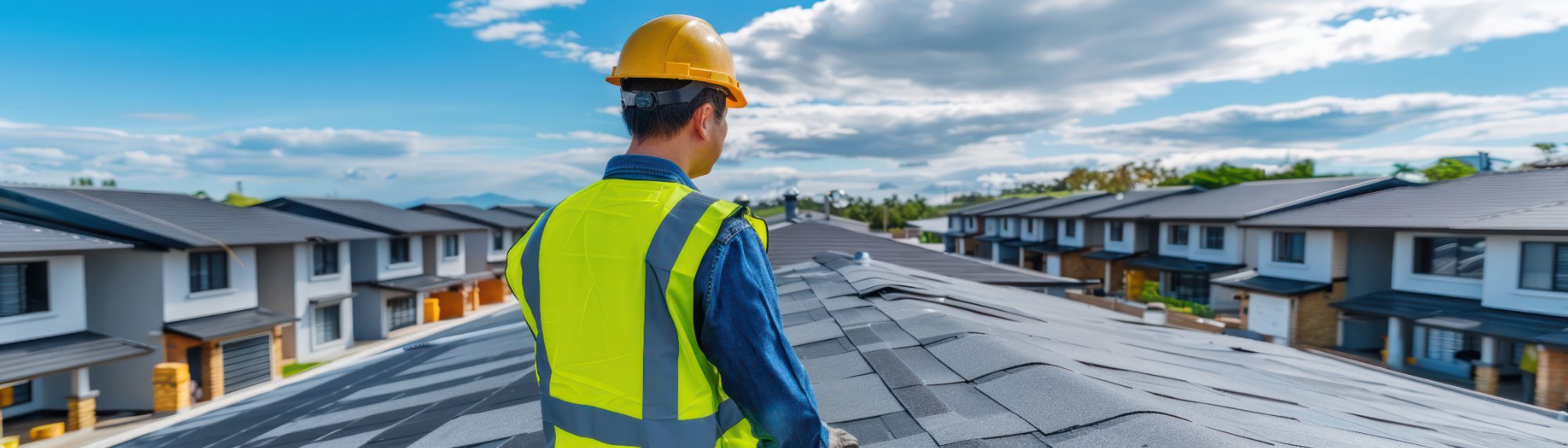
Hackney Roof Surveys provide independent, certified roof inspections across one of east London's most architecturally diverse boroughs. Our surveyors combine drone aerial photography with thermal imaging to assess every roof type found within the borough's boundaries — from the handsome four and five-storey Victorian terraces lining the streets around Victoria Park and Clissold Park, through the Georgian townhouses of De Beauvoir Square and Clapton Square, the Edwardian family homes of Stoke Newington and Upper Clapton, the post-war housing blocks of Homerton and Hackney Wick, and the growing number of converted industrial buildings and warehouse lofts scattered along the Regent's Canal corridor and through Shoreditch.
Fast, independent roof surveys from local experts.
Hackney's housing stock tells the story of two centuries of rapid urban growth. The Georgian squares and early Victorian terraces in the south of the borough give way to the dense mid-Victorian streets built to house workers in the textile and furniture trades, then to the Edwardian expansions of Stoke Newington and Clapton, the interwar council estates, the post-war tower blocks and low-rise developments, and most recently the wave of warehouse conversions and new-build schemes across Hackney Wick and Dalston. Each generation of construction brought different roofing materials, structural approaches, and characteristic failure points. Hackney Roof Surveys bring the equipment and the specialist knowledge to inspect every one of them.
Whether you are purchasing a Victorian terrace near London Fields, investigating persistent damp in a top-floor Dalston flat, documenting wind damage after an east London storm, or seeking an honest opinion on a roof before committing to expensive repair work, Hackney Roof Surveys deliver the independent evidence you need to act with confidence.
Hackney Roof Surveys exist because too many property owners across this borough have paid for roof work they did not need, or completed purchases without understanding the true condition of the roof above their heads. Our role is straightforward: we inspect, we document, and we report — independently and without any commercial interest in the outcome. We do not carry out repairs, we do not recommend specific contractors, and we hold no financial stake in whether a roof needs attention or not.
Our methodology is consistent and thorough. Every inspection begins with a ground-level perimeter walk assessing rainwater goods, fascias, soffits, and any visible defects from street level. Our DJI Enterprise drone then captures high-resolution photography of every elevation, ridge, valley, hip, and chimney stack — including vantage points that are simply unreachable on Hackney's tightly packed terraces where rear access is often limited to narrow passageways between buildings. Where the survey package includes thermal imaging, our FLIR cameras reveal moisture trapped beneath tiles, behind parapet walls, and within the roof structure itself.
The variety of roofing across Hackney is remarkable. A five-storey Victorian terrace near Clissold Park will have an entirely different roof construction from a converted industrial unit in Hackney Wick, and both differ again from a 1950s housing block in Homerton or a Georgian townhouse on De Beauvoir Square. Hackney Roof Surveys work across every era, every material, and every construction method because the borough demands nothing less.
Every report from Hackney Roof Surveys is written to be acted upon. Whether you hand it to a solicitor during conveyancing, submit it to an insurer as evidence for a claim, or use it to brief a roofing contractor on the precise scope of work required, the document stands on its own as a credible, independent assessment backed by photographic evidence and current repair costings.
Nearby Areas with Similar Properties: The Victorian and Edwardian terraces that define so much of Hackney's roofscape extend into neighbouring boroughs with comparable inspection challenges. Homeowners in Islington and across the border into Waltham Forest face many of the same issues with ageing slate, degraded lead flashings, and parapet gutter failures. See our area-specific guides for detailed information about your location.
Hackney Roof Surveys are not roofers, builders, or contractors. We provide independent inspection and reporting only — ensuring every assessment is free from commercial bias.
Hackney Roof Surveys are ready to inspect your property. Whether it is a Victorian terrace in Stoke Newington, a warehouse conversion in Shoreditch, or a post-war flat in Homerton, our team delivers the answers you need.
What Hackney Roof Surveys bring to homeowners, buyers, and landlords across the borough
Hackney's dense Victorian streetscape creates unique access challenges. Rear extensions butt up against neighbouring buildings, passageways are too narrow for scaffold towers, and four-storey elevations put critical roof details far beyond binocular range. Our DJI Enterprise drone navigates these constraints to capture every ridge, parapet, chimney stack, and valley in high-definition detail — delivering the kind of close-up evidence that ground-based methods simply cannot provide on tightly packed urban terraces.
Concealed moisture is a persistent concern across Hackney's ageing housing stock. Victorian slate roofs can harbour leaks behind parapet walls for years before visible staining appears inside. Loft conversions — prevalent throughout the borough — introduce junction details that are particularly prone to wind-driven rain penetration. Our FLIR thermal cameras detect the temperature variations caused by trapped moisture beneath coverings, behind flashings, and within the timber structure, identifying problems long before they become visible or cause structural damage.
Every Hackney Roof Surveys report is a document you can act upon — annotated with high-resolution drone photography, thermal overlays where included, and clear itemised repair costings at current market rates. Whether you share it with a conveyancing solicitor to support a purchase negotiation, submit it to an insurer as documented evidence for a storm damage claim, or pass it to a contractor as a detailed scope of works, the report communicates exactly what was found and what it will cost to put right.
Hackney Roof Surveys hold full professional indemnity and public liability insurance. Our surveyors carry recognised industry certifications and CAA-approved drone pilot licences. Every inspection follows a standardised methodology refined across thousands of London properties, ensuring consistent accuracy whether we are assessing a listed Georgian townhouse in De Beauvoir or a converted factory unit beside the Regent's Canal.
Hackney is not one housing type — it is a patchwork of distinct neighbourhoods, each built in a different era and each carrying its own roofing characteristics. The tall Victorian terraces around Victoria Park and London Fields are clad in Welsh slate with lead-dressed chimney flashings, parapet gutters concealed behind brick upstands, and decorative ridge tiles that have weathered a century and a half of London rain. The Georgian conservation areas of De Beauvoir and Clapton Square present handmade clay tiles and older lime mortar joints. The Edwardian streets of Stoke Newington carry machine-made clay tiles on steeper pitches with bay window canopies that trap debris and moisture. The post-war blocks across Homerton and Hackney Wick rely on flat membrane systems that degrade predictably with age.
Hackney Roof Surveys understand these distinctions because we inspect them week in and week out. We do not apply a generic checklist to a Hackney property — we tailor every inspection to the specific era, materials, and construction method present on the roof in front of us. That local familiarity is the difference between a report that uncovers hidden problems and one that merely records what anyone can see from the pavement.
From the slate-clad Victorian terraces near London Fields to the flat-roofed housing blocks of Homerton, Hackney Roof Surveys know this borough's roofscape inside out.
Feedback from homeowners and buyers who have used Hackney Roof Surveys
"We were about to exchange on a four-storey terrace near London Fields when we decided to get an independent roof check. Hackney Roof Surveys flew a drone over the property and found a cracked lead flashing behind the front parapet that was channelling rainwater straight into the brickwork. The homebuyer report had not mentioned it at all. Their repair costings gave our solicitor the evidence to renegotiate, and we saved over eight thousand pounds before we even picked up the keys."
"Persistent damp in our top-floor Dalston flat had been misdiagnosed twice by roofers who blamed condensation and internal plumbing. Hackney Roof Surveys traced the moisture with thermal imaging to a deteriorated parapet gutter lining on the rear elevation — something neither tradesman had even looked at. The actual repair cost less than two thousand pounds and the damp vanished within weeks. We wish we had called them first."
"Storm damage to our loft conversion in Stoke Newington led to water entering the dormer bedroom. Our insurer dismissed the claim as pre-existing wear. Hackney Roof Surveys documented fresh tile displacement aligned with the recorded wind direction and provided timestamped photography proving the damage was recent. The insurer reversed their decision and paid the full claim inside a month. Absolutely worth every penny."
Why Hackney Roof Surveys deliver results that a DIY check or ignoring the problem simply cannot match
Many Hackney homeowners attempt a visual check from the garden or lean out of a loft hatch before deciding whether their roof needs professional attention. Others wait until a leak becomes visible inside the property. The table below sets out how a professional inspection from Hackney Roof Surveys compares with these alternatives — and why acting early almost always costs less than acting late.
A ground-level look at what you can see from the garden or street — useful for spotting obvious damage but unable to reveal hidden defects
Full professional inspection with drone, thermal imaging, and a detailed written report — the standard Hackney property owners deserve
Waiting until a leak becomes visible inside the property — by which point underlying damage has often escalated significantly
Common questions answered by Hackney Roof Surveys
Hackney Roof Surveys operate across the entire borough. Our regular inspection areas include Hackney Central and the streets surrounding Mare Street, Stoke Newington and Clissold Park, Dalston and Kingsland Road, Lower Clapton and Upper Clapton, Homerton, Hackney Wick and the canal-side developments, Shoreditch and Hoxton, De Beauvoir Town, Haggerston, South Hackney and Victoria Park Village. We also cover properties on the borders with Islington, Haringey, and Waltham Forest.
A standard Victorian or Edwardian terraced house in Hackney typically requires between one hour and two hours on site, depending on the number of floors, the complexity of the rear extension, and whether a loft conversion has been added. The taller four and five-storey properties in Stoke Newington and around Victoria Park tend toward the longer end of that range because of their multiple chimney stacks and concealed parapet gutters. Every client receives their detailed written report within forty-eight hours of the inspection.
Warehouse and industrial conversions form a growing part of our Hackney schedule. These buildings present flat membrane roofing systems — EPDM, single-ply, felt, and GRP — alongside glazed rooflights, original cast-iron drainage, and occasionally remnants of industrial roofing fabric concealed beneath modern coverings. Our drone captures details across wide flat roof areas that are difficult to walk safely, and thermal imaging reveals ponding, delamination, and membrane failure without any need for invasive testing.
Every comprehensive and premium report from Hackney Roof Surveys includes timestamped drone photography, thermal scan evidence where applicable, narrative damage descriptions, and itemised repair costings at current market rates. Insurance providers require documented proof rather than verbal descriptions when assessing claims, and our reports are formatted to meet those expectations. We have supported numerous successful claims across Hackney — particularly following storm events where wind-driven rain exploits the exposed parapet details and chimney junctions common on the borough's Victorian housing stock.
Hackney's Victorian terraces commonly present slipped or missing natural slates, perished lead flashings around chimney stacks, eroded pointing at ridge and hip junctions, and blocked or cracked parapet gutter linings — a feature of the borough's characteristic butterfly roofs where two slopes drain into a central channel concealed behind a front or rear parapet. Edwardian properties show clay tile fatigue and corroded bay window lead work. Post-war housing blocks suffer from flat roof membrane failure, particularly on exposed upper-storey walkways. Loft conversions, which are extremely common across Hackney, frequently introduce dormer junction failures and inadequate flashing details where the new structure meets the original roof covering.
Commercial and mixed-use inspections are a significant part of our Hackney workload. We survey the retail and restaurant premises along Kingsland Road, Broadway Market, and Stoke Newington High Street, the office buildings and creative workspaces across Shoreditch and Hoxton, warehouse conversions along the canal, school buildings, community centres, and places of worship. We inspect every flat roof system — felt, GRP, EPDM, single-ply, and mastic asphalt — as well as the traditional pitched roofing found on many of the borough's converted commercial buildings.
Have another question? Contact Hackney Roof Surveys directly.
Understanding the borough's housing stock and what it means for your roof
Hackney's property market has transformed over the past two decades. Average prices across the borough now sit above the wider London average, with Victorian terraces near Victoria Park, London Fields, and in Stoke Newington regularly changing hands for well over a million pounds. Even more modest properties in Clapton, Homerton, and Dalston command significant sums. At these price levels, a hidden roof defect costing five or ten thousand pounds to repair represents a material financial risk — one that a standard homebuyer report is not designed to uncover.
The dominant housing type remains the Victorian terraced house, built during the borough's explosive nineteenth-century growth when the population surged from twenty thousand to over two hundred thousand in a matter of decades. These terraces were built quickly and to tight budgets, using Welsh slate on timber-framed roof structures with lead-dressed flashings around chimney stacks and parapet walls. A century and a half later, the slate is often still serviceable but the lead flashings, lime mortar joints, and timber battens are reaching the end of their natural lifespan.
Georgian townhouses survive in conservation areas including De Beauvoir Square, Clapton Square, and around St John's Church. Edwardian properties line the streets of Stoke Newington and Upper Clapton, carrying machine-made clay tiles on steeper pitches. Post-war housing — council estates, tower blocks, and low-rise developments — dominates Homerton, parts of Hackney Central, and the edges of Hackney Wick. The most recent additions to the roofscape are the warehouse and industrial conversions scattered along the canal and through Shoreditch, many of which introduced modern flat roof membranes over structures originally built for commercial or manufacturing use.
Loft conversions are a defining feature of modern Hackney. The demand for extra space in the borough's terraced houses has led to a wave of dormer and mansard conversions, each of which creates new roof junctions, valley details, and flashing lines that must be precisely detailed and maintained. Hackney Roof Surveys regularly identify defects at these conversion interfaces — problems that would not exist on an unmodified roof but which can cause significant water ingress if poorly executed or inadequately maintained.
Hackney Roof Surveys provide professional roof inspections across the borough and surrounding areas
The commercial and civic heart of the borough features a mix of Victorian terraces, converted commercial buildings, post-war housing blocks, and newer developments. Roof types range from original Welsh slate on period properties to flat membrane systems on modern blocks and refurbished retail premises.
One of Hackney's most sought-after residential areas, featuring large Victorian and Edwardian terraces on tree-lined streets. Four and five-storey houses with Welsh slate roofs, multiple chimney stacks, ornate ridge tiles, and an increasing number of loft conversions with dormer and mansard extensions.
A vibrant corridor of Victorian terraces, converted upper-floor flats above commercial premises, and newer mixed-use developments. The characteristic Dalston roofline features parapet-fronted terraces with butterfly roofs draining into concealed central gutters — a design that demands careful and regular inspection.
Lower and Upper Clapton feature Georgian squares, substantial Victorian properties, and Edwardian family homes alongside post-war social housing. Homerton's housing stock includes 1950s and 1960s blocks with flat roofs, as well as Victorian terraces on the approaches to Victoria Park.
The southern reaches of Hackney combine Georgian conservation areas with warehouse conversions, new-build apartments, and the creative workspaces that define the Shoreditch skyline. Roofing ranges from original handmade tiles on listed townhouses to modern membrane systems on converted commercial buildings.
Hackney Roof Surveys operate beyond the borough boundary into the neighbouring areas that share similar housing stock and roofing challenges. We regularly attend properties in surrounding London boroughs.
Hackney Roof Surveys provide the independent, professional roof inspections that this fast-moving east London borough demands. Whether you are a first-time buyer navigating the purchase of a Victorian terrace near London Fields, a landlord managing a converted flat above a Dalston shopfront, a homeowner investigating damp after storm damage in Stoke Newington, or simply seeking an honest assessment of an ageing roof before committing to costly repair work, our surveys deliver the clarity you need.
Every inspection combines certified expertise with advanced technology — drone aerial photography, thermal imaging, and detailed written reporting — to give you a complete, unbiased picture of your roof's condition. We do not carry out repairs. We do not recommend contractors. We provide the facts, the photographs, and the costings, and you make the decisions.
Every report is independent, detailed, and written to be acted upon — whether you are buying, selling, claiming, or simply protecting your investment.
Call Hackney Roof Surveys today or complete the form below to arrange your inspection.
Contact Hackney Roof Surveys today to arrange your roof inspection
Monday - Friday: 7:30 AM - 9:30 PM
Saturday: 7:30 AM - 7:00 PM
Sunday: 9:00 AM - 5:00 PM
For urgent roof inspection needs in Hackney, please call Hackney Roof Surveys directly.
Call Now